.png)
Listen to this article:
Sunday afternoon, Jan. 19 in Davos, Switzerland. I’m among 40 Global Shapers from across the globe arriving at the Congress Center for registration, the only attendees in an otherwise empty venue, surrounded by snow-covered mountains and complete silence except for security and staff preparing the halls. We stand at the threshold of one of the world's most significant gatherings, the World Economic Forum Annual Meeting in Davos, all of us under 30 years old. The nervous energy is palpable, mixed with excitement and anticipation for the week ahead. We’re seeing the venue before anyone else, a surreal privilege and a grounding moment before the chaos that’s about to begin.
Turns out this is the only day of calm we'd experience all week.
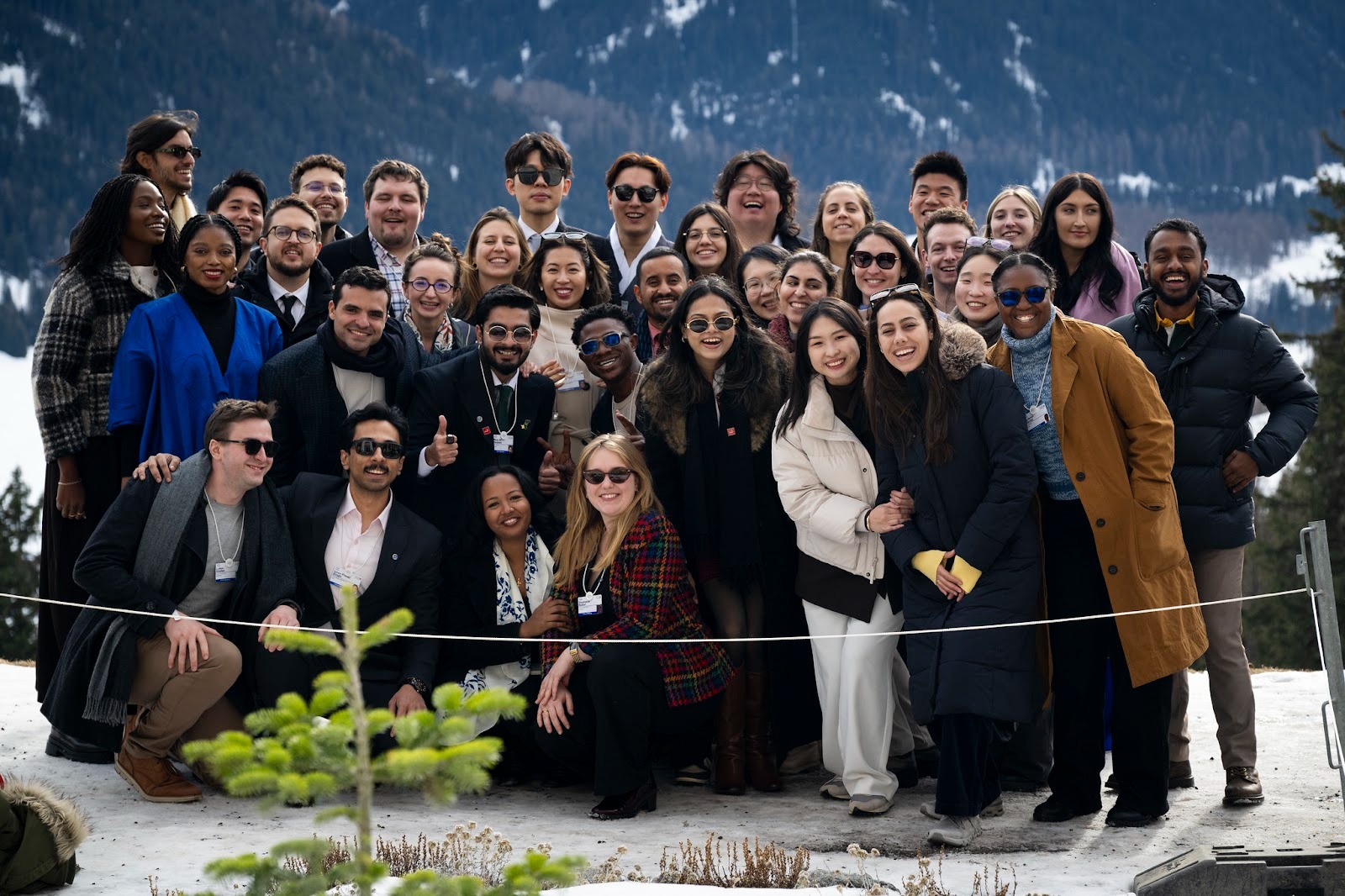
I was the only Portuguese participant in this year's Global Shapers delegation at the 56th annual WEF. Global Shapers comprise the volunteering arm of the WEF, a network of 11,000+ young leaders under 30 years old from 500+ hubs in cities around the world. For more than a decade, the WEF has invited a delegation of Shapers to the Annual Meeting as part of their effort to diversify voices and perspectives.
The Shapers model is simple but powerful: We discuss global challenges and solutions here at the international level and apply the insights we gain to local problems in our own cities. As part of the Porto hub, I work with other young professionals to understand how innovations and approaches from around the world can solve challenges specific to our community. For example, we adapted iFail from the Skopje hub, in North Macedonia, to combat Portugal’s cultural fear of failure. Through partnerships with the University of Porto, we’ve hosted sessions on topics ranging from entrepreneurship and academic research to sports and social innovation, each featuring experts sharing real stories of failure and resilience in their field.
In Davos, our delegation of 40 joined nearly 3,000 attendees: 400 political leaders, including 65 heads of state and government; 850 CEOs and chairs of the world's most influential companies; and 100 leading technology pioneers. In a sea of power and influence, we were the youngest voices.
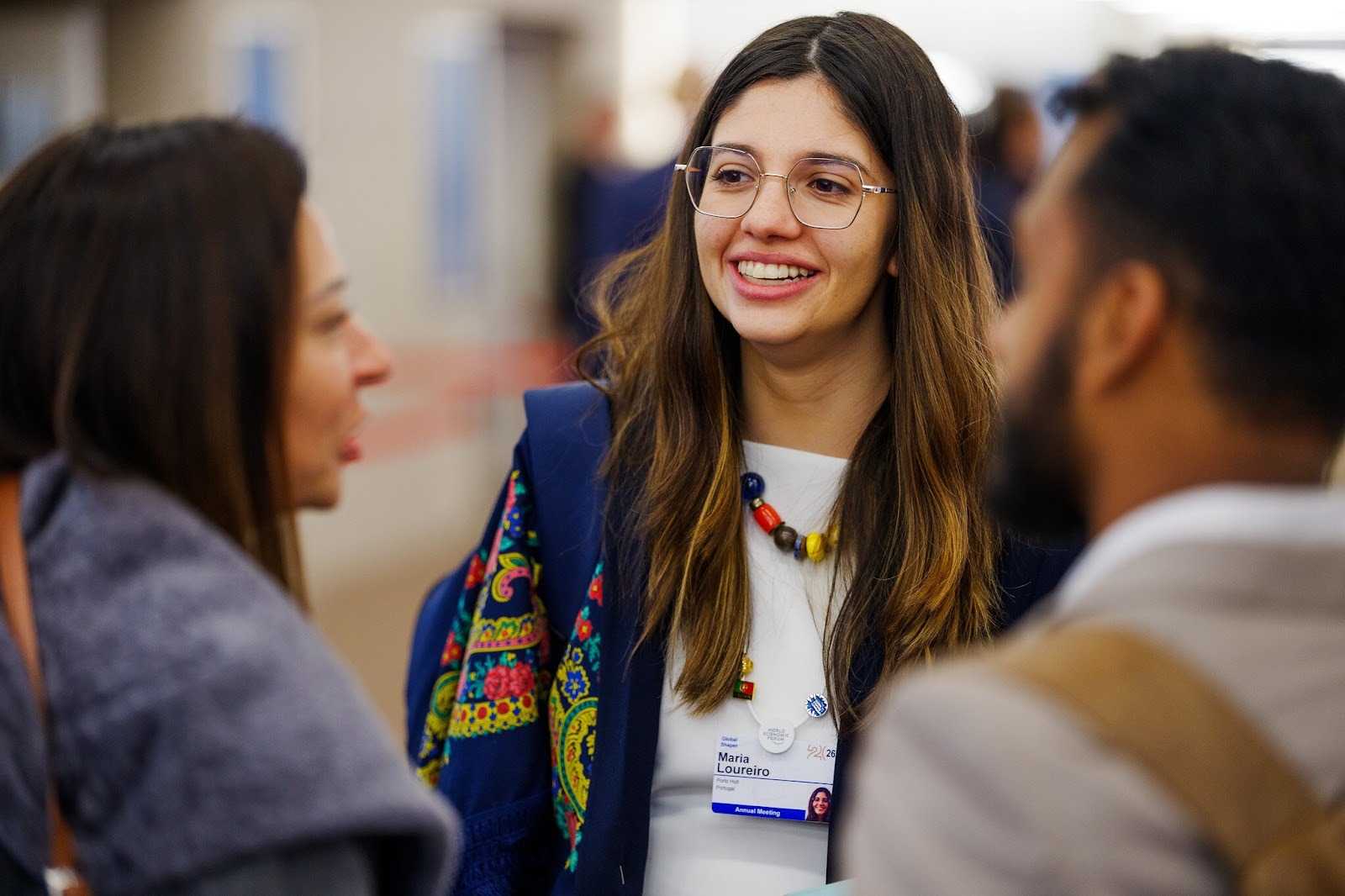
I arrived expecting the stereotypical image we see in the media: Western European and American executives in closed-door meetings. But the reality was strikingly different. This was by far the most multicultural event I've ever attended, with people from more than 130 countries representing a vast mix of educational backgrounds, ethnicities, ages and genders across countless professional fields. Rather than the secretive, conspiratorial gathering portrayed in the media, it was a professional conference with accessible, curious leaders eager to hear from the youngest voices in the room.
The energy was unexpectedly warm. My fellow shapers and I found leaders genuinely interested in our concerns and perspectives. The proximity to influence was amazing; while waiting in line for Bill Gates’ panel on healthcare, I discussed AI applications in life sciences with Brandon Suh, CEO of South Korean unicorn Lunit. In a morning shuttle from the hotel to the Congress Center, I found myself debating misinformation and political disconnection with Jessica Rosenworcel, executive director of the MIT Media Lab.
Beyond the official Congress Center, Davos transforms completely during the Annual Meeting. The main street becomes a showcase of corporate "Houses," where big companies like Google, Deloitte and the Financial Times take over local businesses for the week, hosting panels and discussions that range from open-access to invite-only. Hotels are filled with private meetings and business dinners. More than 1,000 side events happen across the village, giving us access to conversations beyond the official program.
Evenings brought a different energy entirely. Hotels and bars hosted theme parties where countries showcase their unique culture. Japan Night drew the biggest crowds, Indonesia Night brought vibrant energy and Pakistan Night offered its own mix of music, food and celebration. Some local bars, sponsored by companies, opened exclusively to "white-badge" attendees—those officially invited by the WEF. At one of these, I found myself in surreal moments: walking by the pop icon Katy Perry and Canada’s former Prime Minister, Justin Trudeau, and singing classic pop songs alongside Dr. Tedros Adhanom Ghebreyesus, Director-General of the World Health Organization. That definitely wasn't on my bingo card for the week.
With 300 official sessions on the WEF program, plus invitations to private meetings and meals, preparation was critical. I was strategic in choosing events to attend. I prioritized private sessions where Global Shapers were explicitly invited and intimate roundtables with maximum 15 people where real dialogue happened on topics like leadership, digital safety with AI and AI for social innovation. For the main program, I chose sessions with leaders I wanted to meet or panels that weren't livestreamed, since I could watch recorded sessions later. I also reached out directly to participants for one-on-one conversations on topics relevant to my work.
Everyone advised leaving room for serendipity, and I'm glad I listened. Between sessions, I made time to eat, hydrate and recharge, both literally and mentally. Some of the most valuable insights came from unplanned conversations in those in-between moments.
Major Themes & Insights
AI Goes From Hype to Implementation
Despite the geopolitical tensions dominating headlines, AI emerged as the defining theme of the meeting. Unlike previous years that focused on AI's possibilities, this year's sessions centered on real implementation challenges: what works, what doesn't, across private organizations, social innovation and government deployment.
Highlight Session: The Day After AGI
Speakers: Demis Hassabis, CEO of Google DeepMind; Dario Amodei, CEO of Anthropic
Getting a seat at this session felt surreal. I was in the room with two leaders who've built the AI technologies I use daily. Demis Hassabis, Nobel Prize winner for his revolutionary AlphaFold work that changed drug discovery, was sitting just meters away, discussing the future of intelligence.
Hassibis offered a perspective that resonated deeply: While job displacement concerns are valid, his greatest worry isn't economic disruption but the philosophical question of human purpose when AI takes over significant portions of work. "We might not be ready for that question," he said.
Throughout the session, I noticed a pattern: When ethical and human concerns arose, both leaders deflected ownership to politicians, philosophers and social scientists. It left me uneasy. These are the people building the future. Shouldn't they also help shape how we live in it?
This theme resurfaced in a private workshop on digital safety organized by the WEF's Center of AI Excellence, where participants discussed psychological safety around AI—not just cybercrime, but how people cope with technology's impact on their lives and sense of purpose.
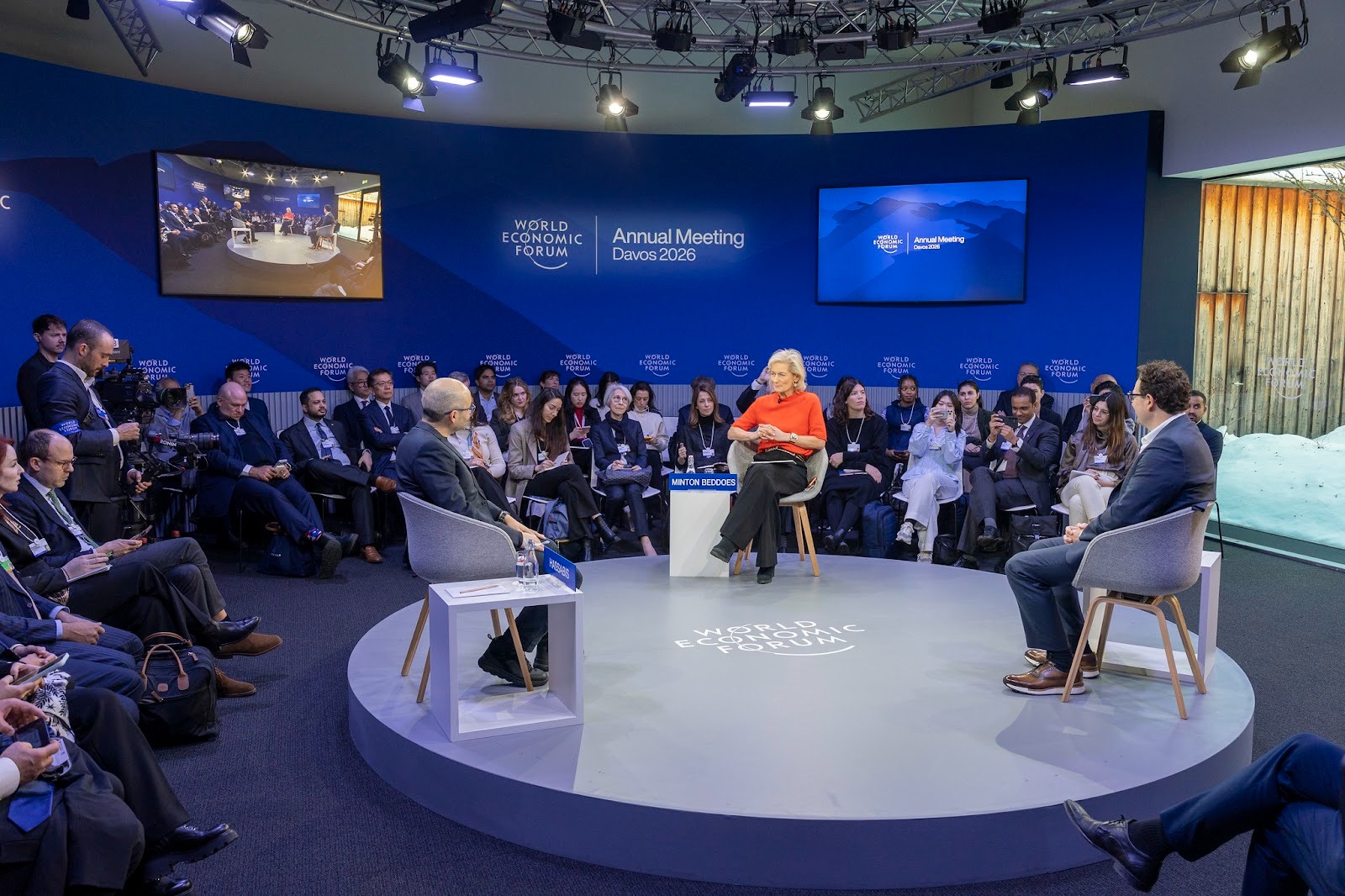
From another angle, Hassibis’ advice to undergraduates was useful. "If I was to talk to a class of undergrads right now, I'd be telling them to get really, unbelievably proficient with these tools,” he said. “That can be even better, maybe, than a traditional internship in the sense that you're sort of leapfrogging yourself to be useful in a profession."
He emphasized that many AI developers don't have time to fully explore their own creations, opening an opportunity for young people to become experts by understanding limitations and best applications.
One of my main questions going into Davos was learning how leaders think about youth who will be subject to AI-related job shifts. After asking this question throughout the week, Hassibis' answer stood out as the only one that moved beyond talking points to something genuinely actionable.
At Loka, we work with the exact tools and challenges discussed at Davos. Our clients face these implementation questions daily: how to deploy AI responsibly, how to prepare teams, how to ensure technology serves real needs. This session validated my sense that we're at the leading edge of innovation, solving the precise challenges global leaders are struggling with.
Healthcare Innovation, from RNA Revolution to Implementation at Scale
Highlight Session 1: RNA, Why it is still a Big Deal
Speakers: Tom Cech, Nobel Prize Winner for Chemistry, 1989 and Victor Ambros, Nobel Prize Winner for Physiology or Medicine, 2024
This session focused on dismantling COVID-19 vaccine misinformation by explaining the science behind mRNA technology and advocating for fundamental research funding, particularly as U.S. support decreases.
A critical discussion centered on open-source datasets for scientific development. Cech emphasized teaching students proper AI validation and awareness of risks like hallucinations, because you can't just throw AI brute force at biological problems. This point directly connects to Loka’s approach: We've built a multidisciplinary team of AI experts, bioengineers and bioinformaticians precisely because bridging AI and biology requires deep expertise in both domains.
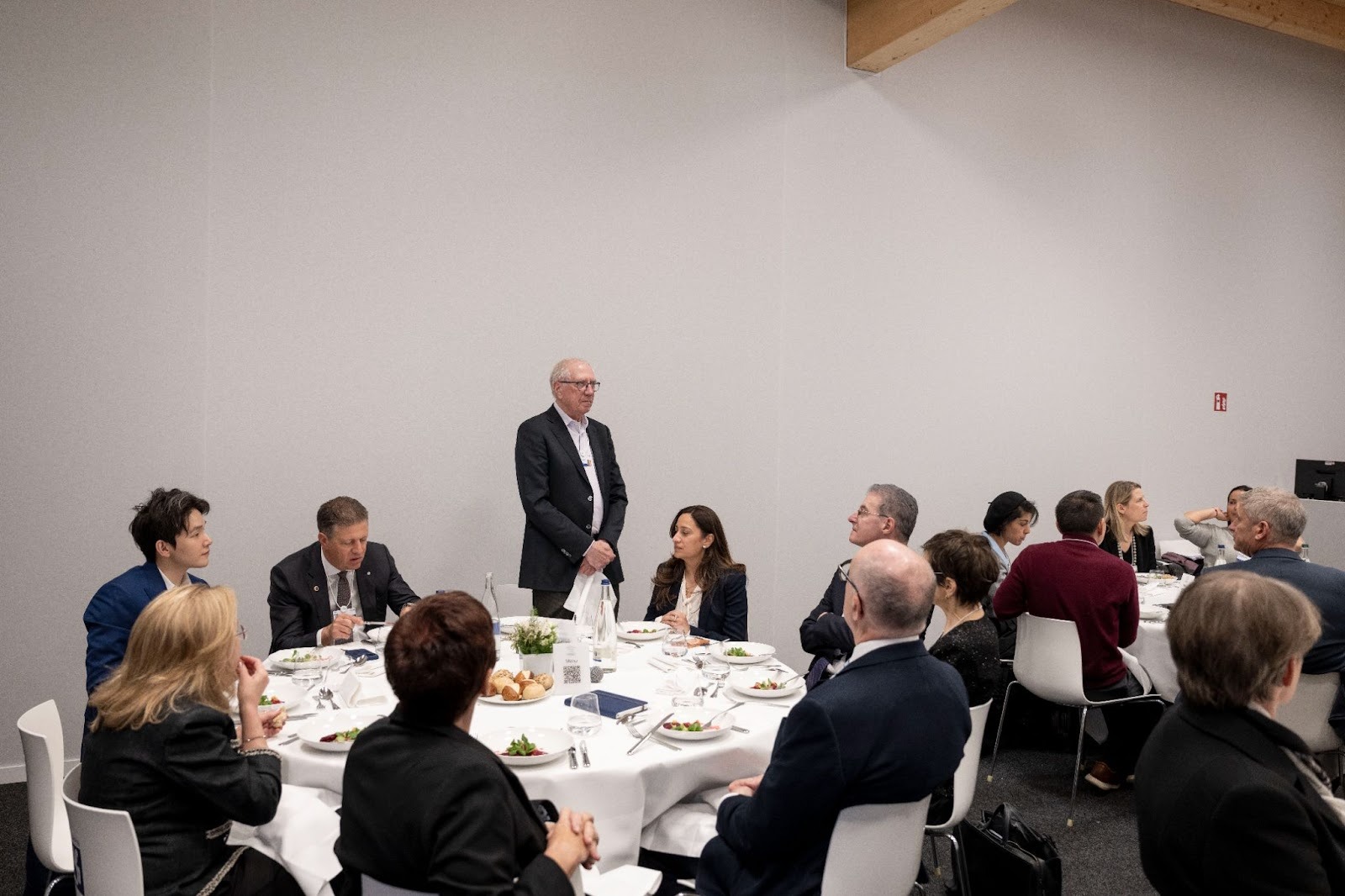
I had lunch with Tom Cech the day of this session, where he reflected on how real discovery requires deep collaboration with peers, he emphasized how you can't innovate in isolation. It was the perfect encapsulation of what made that week valuable, putting everyone in the same place, at the same time, and letting genuine exchange happen.
Highlight Session 2: Possibilities and Limits of Cancer Care
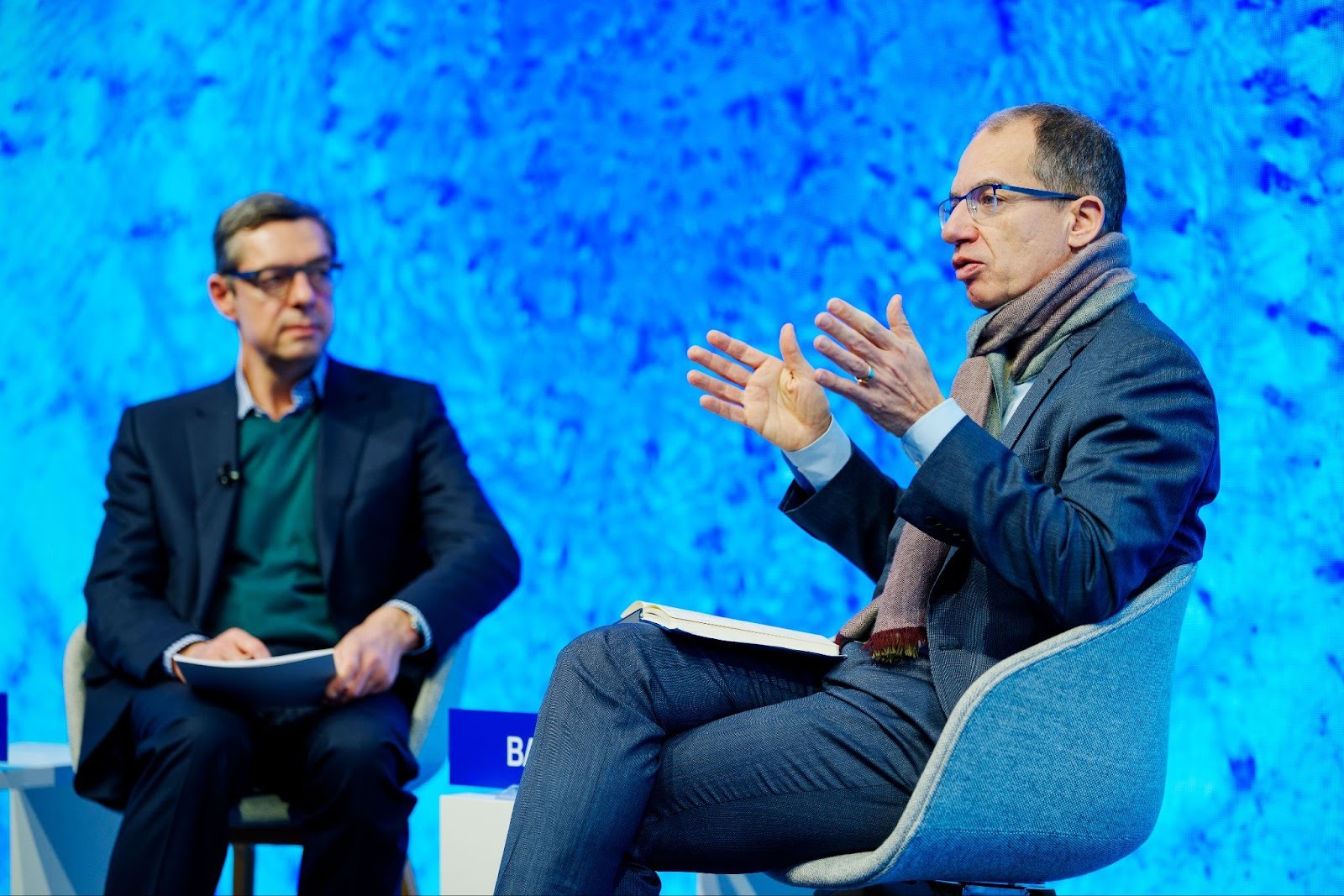
Speaker: Stéphane Bancel, CEO of Moderna
Bancel outlined Moderna's progress toward personalized cancer treatments and stressed prevention through simple early detection measures. He emphasized how AI and technology will scale production to reduce costs and democratize medicine globally. Our work at Loka directly contributes to this mission.
Additional Perspectives:
Sessions on "At the Cusp of Healthcare for All" and "Healthcare: Cost or Investment?" revealed a paradigm shift: With increasing geopolitical risks,
countries are repositioning healthcare from a social challenge to a structural priority and matter of national security.
This perspective, shared repeatedly by stakeholders across sectors, signaled significant investment shifts ahead with governments treating healthcare infrastructure like defense spending and businesses developing healthcare solutions gaining access to security-level budgets. But it will also deepen global divides, with speakers noting that China and the U.S. are already investing heavily while Europe falls behind.
Youth Earns a Seat at the Table
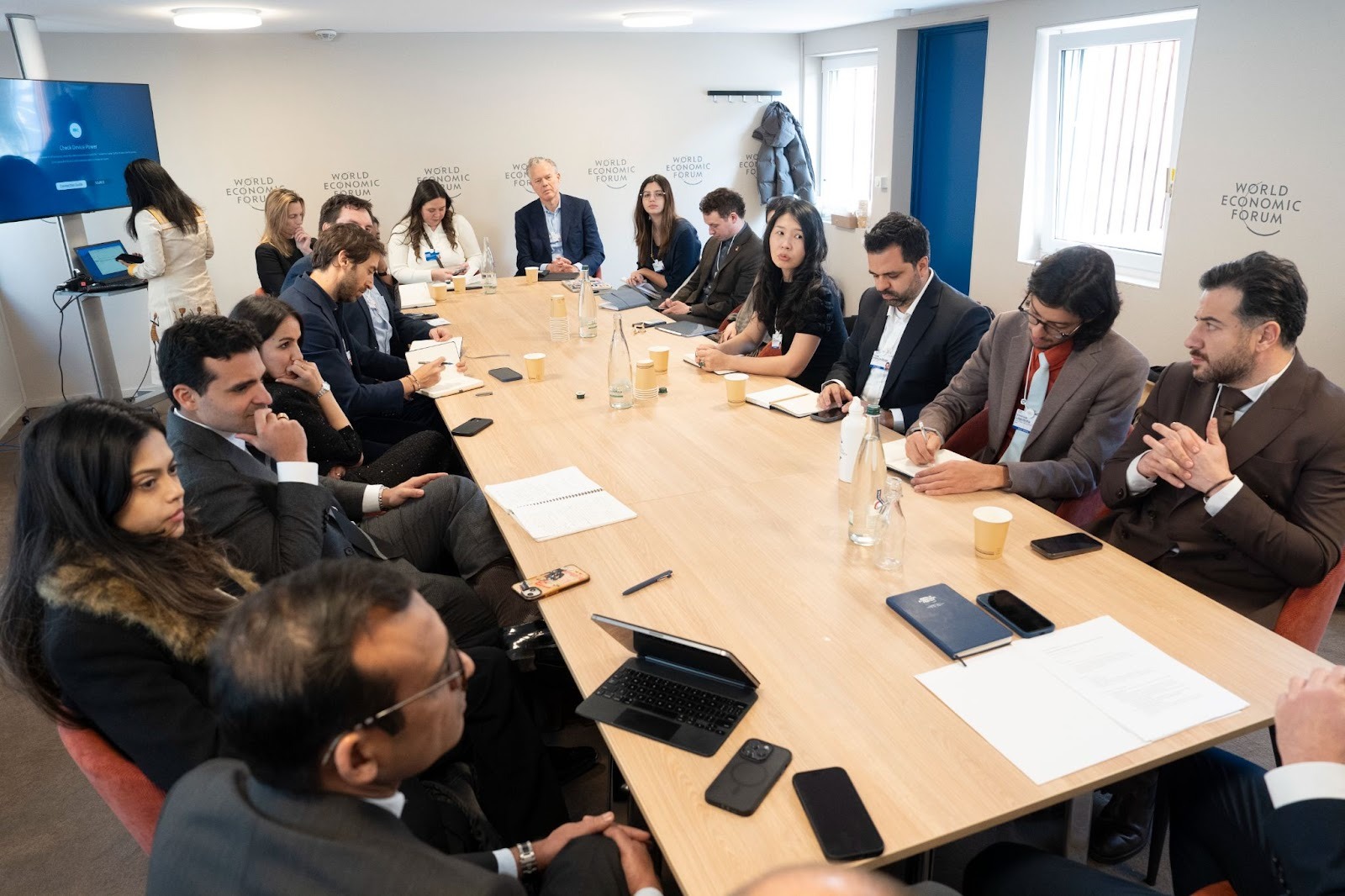
A significant portion of my time focused on youth recognition and participation. As part of the Global Shapers delegation, I attended multiple sessions and private meetings with ministers of foreign affairs, former prime ministers, chemical industry leaders and AI social innovators to discuss how young people contribute to organizational development and shape the future.
We shared findings from the Youth Pulse 2026 report, launched before the Annual Meeting to articulate the global youth perspective. The report surveyed nearly 4,600 young people from 489 locations across 144 countries—an astonishingly diverse dataset on global youth perspectives—and found that though young people are highly engaged with AI and innovation, nearly half expect rising social fragmentation and loneliness to define the decade ahead. The Davos discussions challenged assumptions about age and expertise, emphasizing that contribution should be based on knowledge and capability, not years lived.
It was in these moments that I felt honored to be part of Loka, a company in which we have young people in senior roles because of their expertise, knowledge and effort. Age should never be a blocker for growth.
After five days of panel talks, private roundtables and countless one-on-one conversations, I left Davos with profound ambivalence. Professionally, I was encouraged by the fact that Loka is trying to solve the exact challenges that world leaders are discussing. Take our work with a billion-dollar biotech company specializing in reversing aging: We reduced their compute costs by 40% and storage costs by $18,000 monthly, enabling them to move breakthrough ideas into production faster.
Personally, I experienced conflicting emotions. I met extraordinary innovators and social entrepreneurs genuinely committed to making change now, not 30 years from now, which filled me with hope. These leaders listened to our views and were willing to act.
But I also witnessed a troubling pattern: leaders pushed responsibility for difficult decisions onto my generation, too afraid to fail, using political constraints as excuses for inaction. Many stood in positions of power but were unwilling to take risks on urgent challenges like climate change and AI-driven job displacement. I saw this clearly when discussing DEI initiatives being rolled back; they can and should maintain these values through quieter, sustained action even when public advocacy becomes risky. The spirit was collaborative but accountability felt deferred in critical moments, leaders passing decisions forward when the window for action is closing.
But I'm choosing optimism. Not blindly, but deliberately.
Midway through the week, after a particularly tense day, a few of us Shapers found a quiet spot to decompress. Someone I'd met the night before, an attorney, sat down and listened to our frustrations. "You've hit the Davos wall, welcome!" she said. She'd attended many times and told us something crucial: This feeling always happens midweek, but one or two weeks later, everything clicks.
"You're the young people," she said. "You have to keep hope alive. If you already create this much impact before 30, imagine what you'll do in 20 years. But only if you don't let pessimism paralyze you."
She was right. I'm analytical enough to see the risks and hypocrisy clearly, but pessimism offers nothing but paralysis. If I'm already helping build AI systems that accelerate drug discovery and programs that bridge digital divides, what does pessimism change except stopping me from continuing?
During an unplanned session on the final day, I gained a pearl of wisdom from Elon Musk, of all people. He said, "I'd rather be an optimist who's wrong than a pessimist who's right." Musk gets a lot of things wrong, but in this case I have to agree with him.